

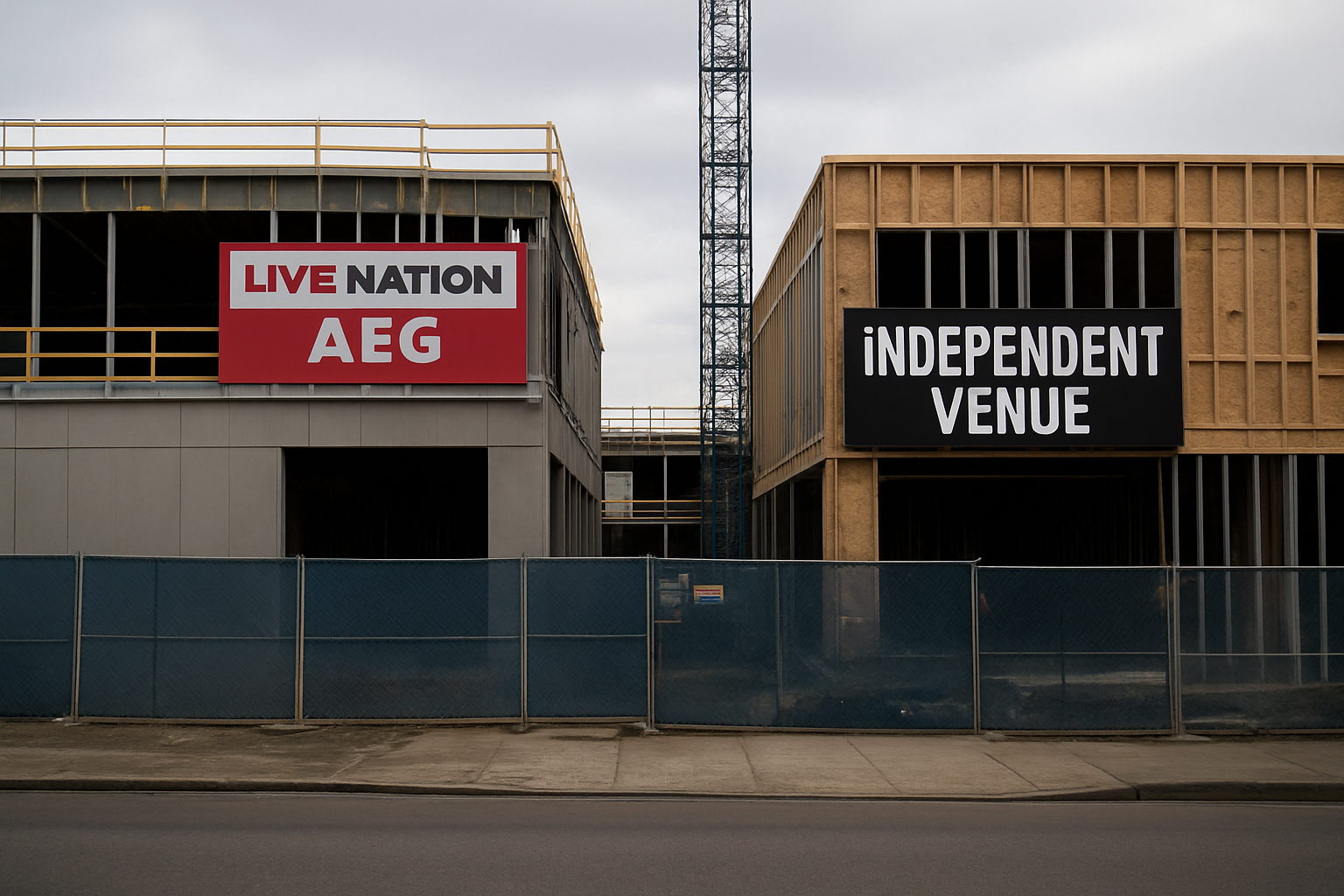
Two corporate-backed venues are rising in Portland at the same time, testing whether the city’s long-empty mid-market can be fixed without squeezing independents.
Portland’s long-running venue gap is about to be filled twice. Live Nation and AEG Presents are both building mid-sized rooms in the city, with openings expected in 2027 and the two projects sitting roughly two miles apart.
That is the headline. The harder question is what happens when the missing rung in a market gets supplied by two of the biggest players in live music.
Two projects, one missing market
As Axios reported Sept. 3, Live Nation’s Steelhead is planned for Portland’s Central Eastside with a 3,500-capacity room. AEG Presents and longtime local promoter Monqui Presents are developing a flexible venue at the former Nordstrom site in the Lloyd Center that will hold between 2,000 and 4,250 people.
Both projects are aimed at the same problem: Portland has lacked a modern general-admission venue between its roughly 1,500-capacity clubs and the 20,000-seat Moda Center. That gap has left artists too large for the Crystal Ballroom or Roseland Theater and too small for an arena with nowhere clean to land. Some tours have simply skipped the city.
For agents and promoters, the math is obvious. A proper mid-market room can pull in acts that would otherwise route to Seattle, Bend or out of the region entirely. For fans, it should mean more shows that have been missing from Portland’s calendar. For the city, it could strengthen its place on the national touring map.
Competition, but not the neighborhood-club kind
On paper, two venues in the same size range should create leverage. Agents can compare offers. Promoters can bid harder. Artists can choose between different capacities, locations and deal structures. That is the clean version.
Portland is not a blank slate, though, and Live Nation and AEG are not local landlords trying to outbook one another on a Saturday night. Both companies operate huge promotion networks with touring relationships that reach far beyond Oregon. They can route artists through venues they co-own and use ticketing relationships to improve the economics on their side of the table.
That makes this less like a healthy local booking race and more like two national systems competing to pull the same tours into their own pipelines. The city gets the buildings. The control question is still open.
Independent venues are watching the fine print
Portland has long been described as the last major U.S. city without a Live Nation-operated venue, and for many local music people that was a feature, not a flaw. Steelhead has already drawn opposition from musicians and venue advocates who worry about what a corporate room does to a fragile independent ecosystem.
The concern is not abstract. National Independent Venue Association data cited in the source says only 37% of Oregon’s independent venues were profitable in 2024. That leaves little room for error if a new corporate room starts chasing the same shows as smaller clubs.
MusicOregon co-chair Cheri Jamison said advocates will be watching whether Steelhead books reduced-capacity shows that put it in direct competition with independent rooms. Live Nation has said it intends to book shows that fully use the venue, but it did not rule out limiting or subdividing capacity.
AEG’s project comes with its own complications. The venue’s flexible configuration starts at 2,000 attendees, and its partnership with Monqui gives it a local tie that Steelhead does not have. But the corporate scale behind it still changes the market. Portland may finally get the mid-sized infrastructure booking agents have wanted for years. The real test is whether that infrastructure supports the independent scene around it, or creates two new gatekeepers above it.