

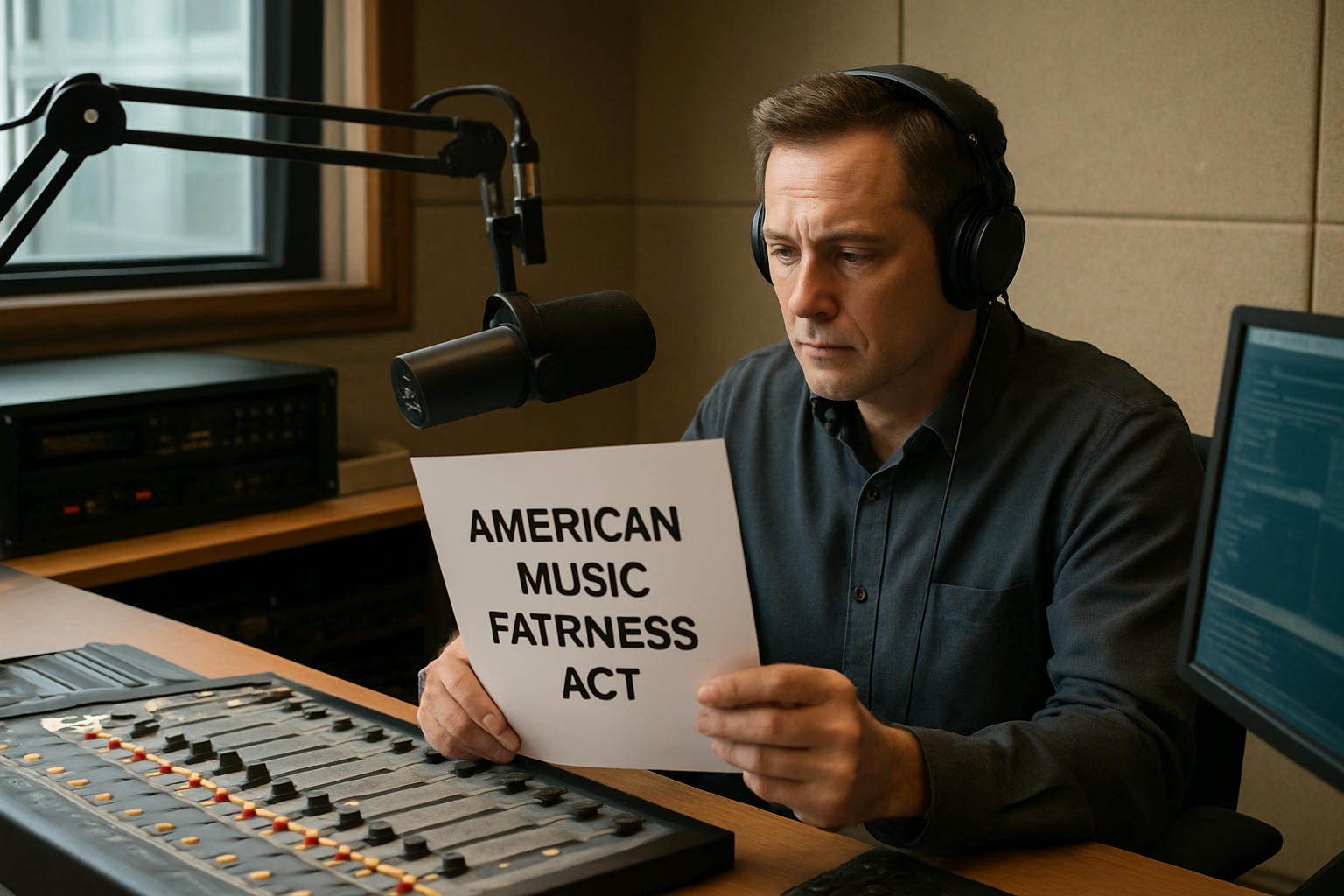
The terrestrial performance royalty bill is still alive in Congress, with bipartisan backing and a narrow window left to move.
The American Music Fairness Act is still alive in the 119th Congress, and that alone makes it worth watching as lawmakers head into the final stretch of the year. The bill would do one thing that has never been true in the United States: require AM/FM radio to pay for the sound recordings it uses to make money.
What AMFA Would Change for Terrestrial Radio
Under current law, songwriters and music publishers get public-performance royalties when terrestrial radio plays a song. The people tied to the recording itself do not. Featured artists, background singers, session musicians and sound recording owners receive nothing for that broadcast use, even though digital radio services already pay sound-recording performance royalties.
AMFA, introduced as S. 326 in the Senate and H.R. 861 in the House, would extend the Section 106(6) sound-recording performance right to terrestrial audio transmissions and bring AM/FM broadcasts into the Section 114 statutory licensing system. That is the core of the bill. It is also the reason the fight has been so long and so bitter.
The argument from supporters is straightforward: if terrestrial radio is using a recording to generate revenue, the people who made that recording should be paid. That is the premise behind the #IRespectMusic campaign as well.
Small Stations Are Not the Target
Opponents have spent years framing AMFA as a threat to small broadcasters. The bill’s text tries to cut that argument off.
Under S. 326, a qualifying station with less than $100,000 in annual revenue would pay $10 a year. Public broadcasters with revenues between $100,000 and $1.5 million would pay $100 per year, while other qualifying stations in that range would pay $500. Those protections are limited to genuinely smaller operations, and the station owner and affiliated entities must have aggregate revenues below $10 million.
For everyone else, the Copyright Royalty Judges would set the rate. Congress also tells the judges they may consider radio’s long-touted “exposure” value in that process. That matters. The familiar claim that radio promotes records does not disappear under AMFA. It becomes part of a rate-setting proceeding instead of a blanket excuse for large broadcasters to use recordings without paying for them.
Why Artists Care About the Direct-License Clause
One of the more important parts of the bill is easy to miss. AMFA includes a safeguard against direct-licensing workarounds that could otherwise cut performers out of their statutory share.
If a copyright owner directly licenses transmissions that could have been made under the Section 114 statutory license, the broadcaster cannot use that deal to contract performers out of their share. The transmitting entity would have to pay 50 percent of the applicable direct-license royalties to SoundExchange, which would then distribute the money under the statutory performer allocations.
That is not a minor detail. It keeps the payment path intact for featured and nonfeatured performers. It also prevents the bill from becoming just another revenue stream that flows to record companies first and maybe reaches artists later, depending on contract terms and recoupment. The statutory route matters.
The Count Is Small, But the Positioning Is Better Than Usual
AMFA is nowhere near the President’s desk. Neither chamber has reported the bill, and the opposition from broadcasters remains strong. The National Association of Broadcasters is still the main obstacle, and that fight has not gotten easier.
Even so, the Senate lineup is notable. S. 326 is led by Sen. Marsha Blackburn (R-TN) and has support from Thom Tillis (R-NC), Bill Hagerty (R-TN), Alex Padilla (D-CA), Cory Booker (D-NJ) and Adam Schiff (D-CA). That is a 3-3 Republican-Democratic split, with Tillis chairing the Senate Judiciary Intellectual Property Subcommittee and Schiff serving as ranking member.
The House bill, H.R. 861, is sponsored by Rep. Darrell Issa (R-CA) and has bipartisan support, including Jerry Nadler and Ted Lieu. It has picked up additional cosponsors since introduction, though it has not been reported from Judiciary.
The Senate also held an IP Subcommittee hearing on terrestrial performance rights in December, with Gene Simmons and SoundExchange President Michael Huppe making the case for performers, while broadcasters presented the opposing view. The hearing gave the issue a real legislative airing, which is more than AMFA has always gotten.
The calendar is the problem now. There is not much runway left in the 119th Congress, and a conventional committee-to-floor path looks increasingly difficult. Congress returns after the November elections, and that could create a narrow opening before January 3, 2027, when unfinished bills die. For AMFA, the next move may matter more than the last several years of argument.