

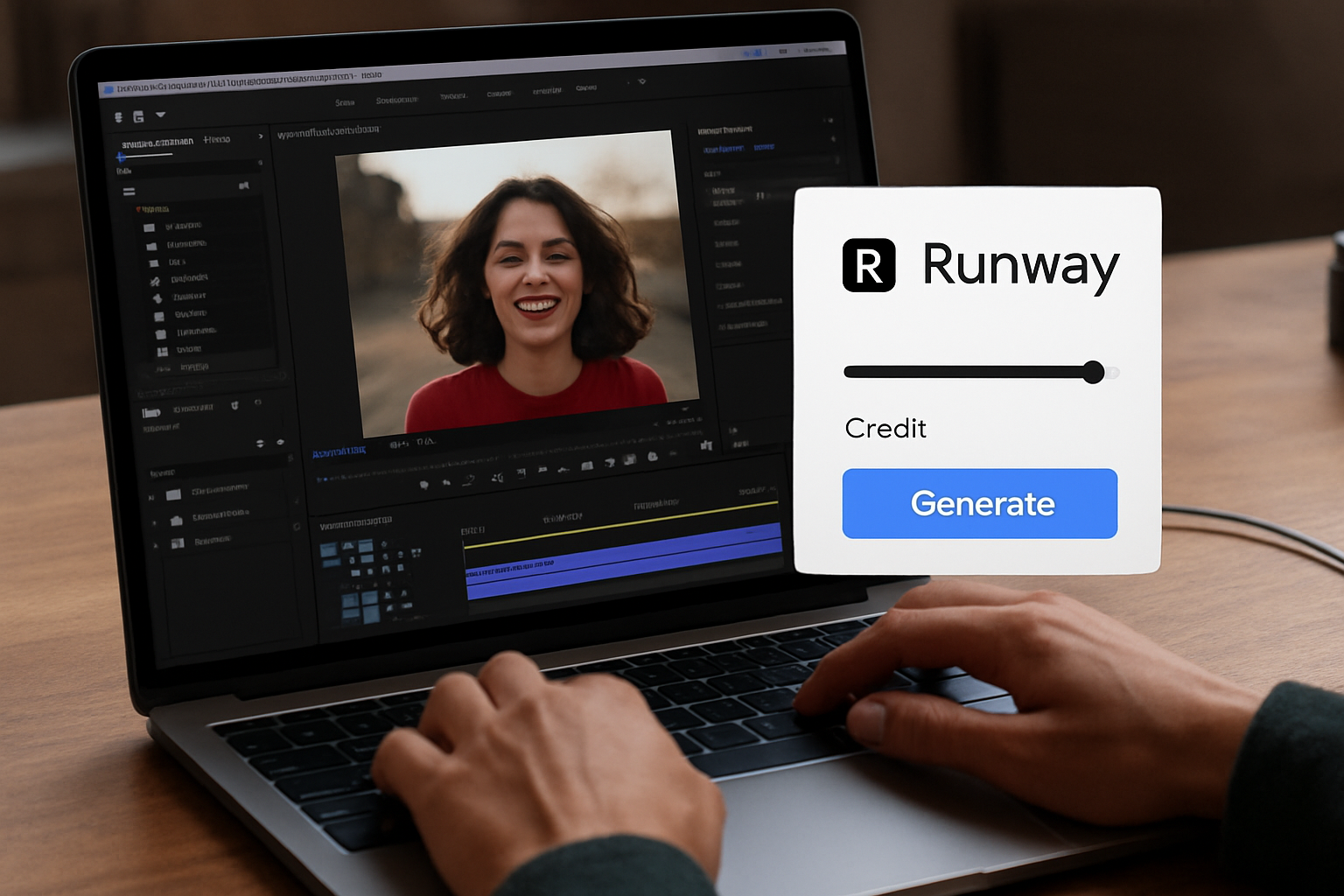
As AI video tools crowd the market, Runway is leaning on production controls, Adobe integration, and a credit-based pricing model that forces teams to plan before they generate.
The pitch around AI video has changed. Creative teams are no longer shopping for the flashiest clip. They want to know whether a platform can survive a real campaign cycle: brief, review, revision, delivery. That is where Runway is trying to hold its ground in 2026.
Runway has been a familiar name in generative video since 2018, but the field around it is far more crowded now. The company’s current case is not just that it can generate video. It is that it can fit into production, post, and client revision without forcing teams to rebuild their workflow around the tool.
Runway’s edge is control, not just generation
Runway’s flagship model, Gen-4.5, is built around text-to-video and image-to-video generation, with the company positioning it as a more refined version of earlier models. The article’s benchmark is blunt: a production-ready rate of 60-70% on first generation. For teams under deadline, that matters more than a perfect demo clip.
Image-to-video is one of the platform’s more practical uses. Starting from approved stills lets teams keep brand identity intact while adding motion. That is useful when a campaign has already been locked visually and the ask is to extend it across broadcast, social, and multiple regional versions without drifting off brief.
Runway’s strongest selling point remains character consistency across multi-shot sequences. That makes it a better fit for episodic content, branded series, and narrative work than tools built only for one-off generation. Director Mode is aimed at that problem, giving users more control over consistency from shot to shot.
Motion Brush is another feature with a clear production use. Instead of animating an entire frame, teams can isolate specific elements for movement. A product can rotate while the background stays still. That kind of control cuts down on cleanup later.
Act-Two extends the same logic into performance capture translation, using human movement reference to guide AI-generated subjects. It is another sign that Runway is trying to sit closer to traditional production tools than to novelty generators.
Why post-production teams are paying attention
Runway is not only selling generation. It is also selling editing. The platform includes object removal and background replacement for uploaded footage, which means it can be used on existing material, not just AI output. That broadens the use case for agencies and post teams that may not be starting from scratch.
The company’s Aleph tool pushes further into in-video editing after generation. For teams juggling revisions, that matters. It gives editors another place to make changes without bouncing between systems.
Adobe integration is one of the clearest reasons Runway has become a default option for some teams. Native plugins for Premiere Pro and After Effects let generated content move directly into existing timelines. Editors stay in familiar software instead of exporting, importing, and managing another layer of friction.
That convenience comes with a tradeoff. The article says the full creative suite takes 4-6 weeks to master, though basic generation becomes comfortable within 1-2 weeks. For teams that need depth across different kinds of client work, that learning curve may be worth it. For teams that only need quick generation, it may be more than they want to absorb.
Pricing forces teams to think like producers
Runway’s pricing is credit-based, which means planning matters. The source lists a free plan at $0 per month with 125 credits, though the excerpt cuts off before the rest of the pricing table. Even so, the structure itself tells the story: this is not a casual, unlimited-use tool. It is one that requires teams to budget generation the way they budget other production resources.
That makes Runway a better fit for teams that already think in terms of cost control, shot count, and revision cycles. It is less useful as an open-ended playground. The platform’s value depends on whether the team can predict what it needs before it starts burning credits.
The broader point is simple. Runway is no longer being judged against a single output. It is being judged against the realities of production. For some teams, that makes it the right tool. For others, especially those needing broadcast-grade HDR finishing, rapid concept iteration, or end-to-end campaign automation, the alternatives may fit better.
That is the real shift in 2026. The question is not whether AI video can generate something impressive. It is whether the platform can keep up once the work gets real.