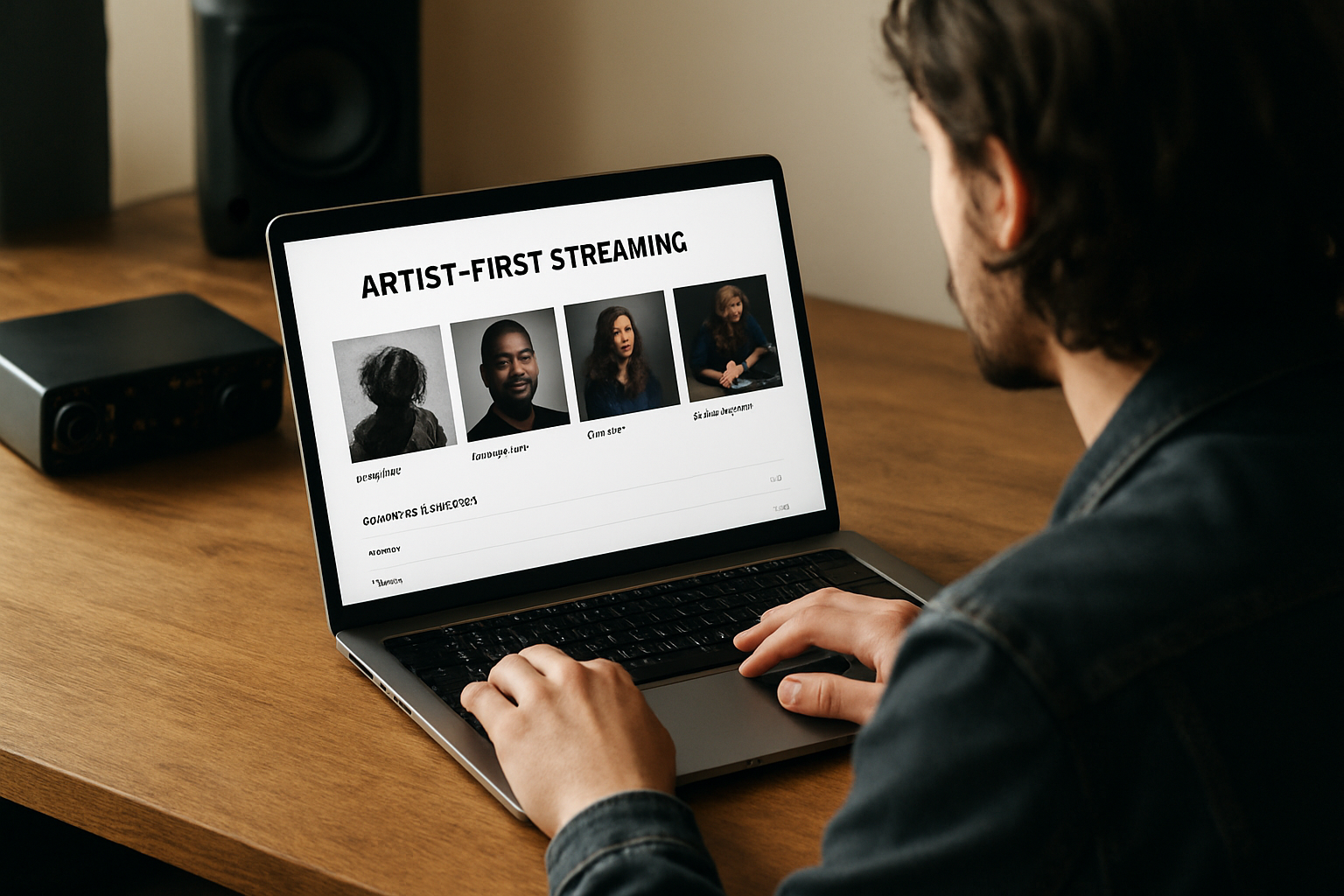
From direct sales to open-source storefronts, these tools shift more pricing, data and fan access back to musicians.
Streaming made music easier to find. It did not make the business easier to control.
That gap is where a new crop of platforms has been trying to move. Instead of leaving artists dependent on a streaming service’s rules, recommendation system or payout structure, these tools let musicians set prices, collect fan data, build mailing lists, sell directly and, in some cases, govern the platform itself.
Direct sales are replacing passive listening
EVEN is built around the idea that streaming should not be the only destination for a release. Artists can sell early access to music, merch, memberships and experiences before or alongside a wider streaming rollout. They set the price and decide what the buyer gets. EVEN takes 20% of most digital sales, 15% of memberships and 5% of merch and event sales. Sales can also be reported to Luminate for chart eligibility.
That model changes the transaction. Fans are not just generating fractions of a royalty through passive plays. They are buying an offer the artist defined.
Sleeve takes a different route, but the goal is similar. It treats an artist website as a mailing list, store, membership hub and fan database all in one. Artists can export email lists, see who bought a release and contact opted-in fans directly. Sleeve says it takes no platform fee from sales or memberships, though payment-processing charges still apply. Its free tier supports up to 250 email subscribers.
Ampwall also pushes direct-to-fan sales, with customizable artist and label pages, community features and no ads, data sales, AI-generated music or crypto. It is an artist-owned public benefit company. Artists currently pay $10 per year for every five hours of uploaded audio, and the platform takes 5% per transaction plus processing fees. More than 1,000 bands and artists are using it, and its community can suggest features directly to the development team.
Alternative streaming is trying to reach real scale
Most artist-first platforms run into the same problem: fairer economics are one thing, audience adoption is another. Audius is notable because it has moved past the proof-of-concept stage. Launched in 2018, the decentralized streaming platform says it has millions of monthly users and more than 250 million streams.
Artists can upload unlimited music for free, offer high-quality streams and lossless downloads, sell music directly, set their own prices and interact with supporters. Its community-run Web3 structure, along with the $AUDIO token, may be a hurdle for artists who want something more familiar. Even so, Audius has shown that an artist-first streaming alternative can attract a meaningful audience and keep operating long enough to be tested in the real world.
Open source and co-op ownership change the power structure
Mirlo goes beyond storefront features. It combines music and merch sales with recurring support, mailing-list management and crowdfunding, but its bigger distinction is that the software is open source. That matters because artist-friendly policies can change when ownership changes. Open-source infrastructure can be inspected, adapted and reused instead of being locked inside one company. Mirlo is also organized as a worker cooperative and has been experimenting with federated social features.
Subvert takes the ownership question even further. Its marketplace is collectively owned by artists, labels, supporters and workers. Artists and labels set their prices, and Subvert charges a 0% platform fee. Sellers keep the purchase price after processing, while buyers can make an optional contribution. Members govern the co-op on a one-member, one-vote basis.
That does not guarantee every decision will satisfy every artist. It does change who gets to make the decisions.
Faircamp strips the platform down to the basics
Faircamp is the most radical option on the list because it is not a marketplace at all. The free, nonprofit software turns a folder of audio files into a self-hosted music website with a player, downloads, playlists and RSS support.
There is no Faircamp account and no central catalog. The musician chooses where the site lives and can connect it to outside payment tools. That gives artists a level of independence most platforms cannot match, but it also means they have to handle hosting, payments and promotion themselves. Faircamp provides the storefront. It does not provide the crowd.
That is the tradeoff running through all of these tools. Each one gives artists back a piece of the digital relationship — price, data, ownership, access or control — that streaming platforms still keep for themselves.