

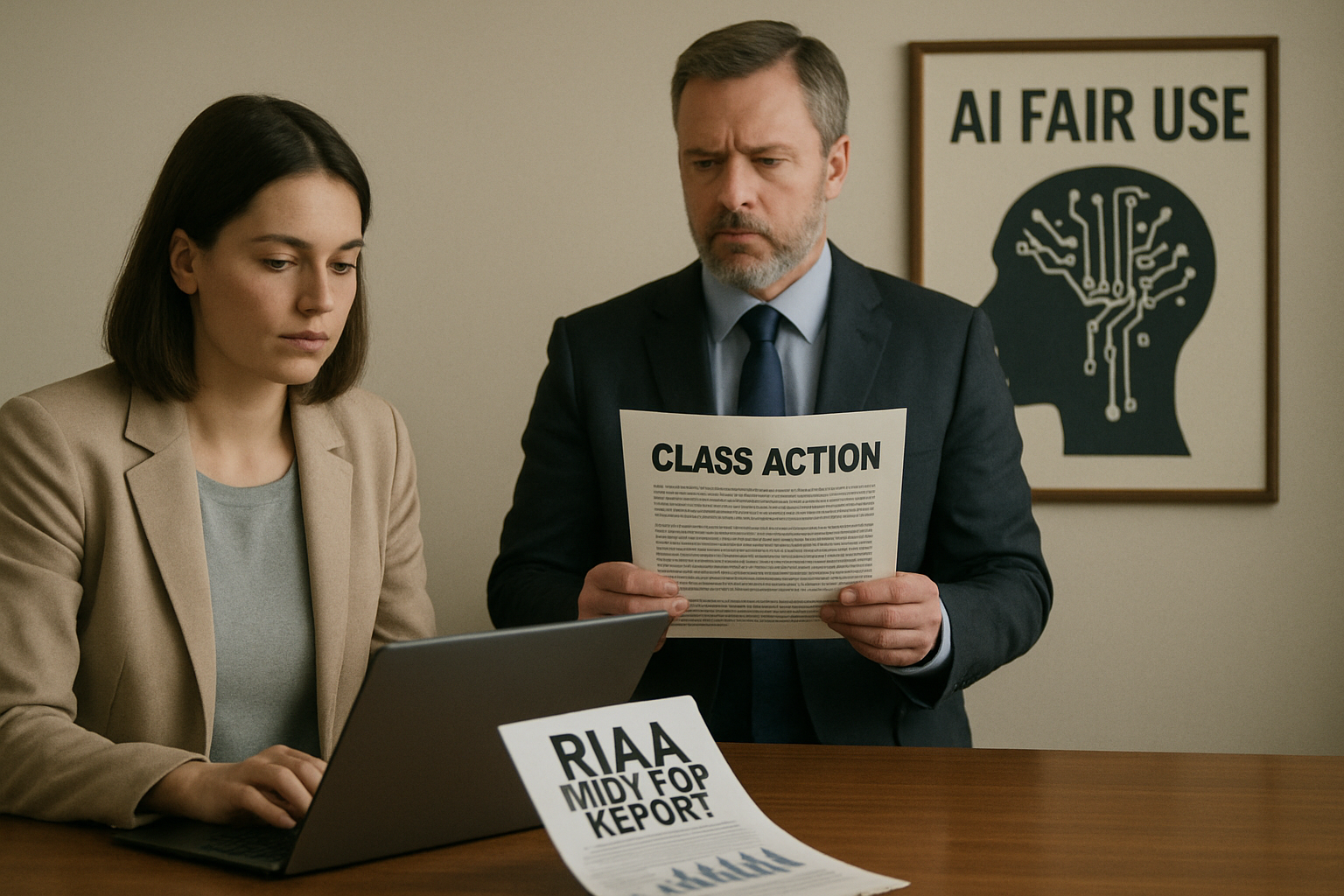
Jay Gilbert and Mike Etchart break down a strong revenue report, a new class action against Suno, and a Trump administration filing that could shape music’s AI fight.
The latest Your Morning Coffee episode lands on the music business’s three pressure points right now: revenue, rights, and artificial intelligence. Jay Gilbert and Mike Etchart use the September 7, 2026 show to move through the RIAA’s midyear numbers, Jason Isbell’s class action against Suno, and a Trump administration filing that could ripple through the industry’s broader fair use battles.
RIAA’s midyear numbers show streaming still carrying the load
The RIAA’s 2026 mid-year report gives the industry a familiar headline with a few sharp details. Streaming remains the engine, pushing revenue to $6 billion. At the same time, CD sales are up more than 50%, a reminder that physical formats still have some life left in the market even as the business remains overwhelmingly driven by digital consumption.
For executives watching the numbers closely, the report is less about surprise than confirmation. Streaming continues to do the heavy lifting. Physical sales are not dead, but they are not changing the shape of the business. The report’s value is in the contrast: growth at the top, fragmentation everywhere else.
Isbell’s Suno lawsuit puts AI training back in the crosshairs
The most pointed legal development in the episode is Jason Isbell’s class action lawsuit against Suno. The claim centers on the allegation that Suno coded AI to “extract musicians’ identities.” That language matters. It moves the conversation beyond abstract arguments about machine learning and into the more personal question of whether a system can be built by taking from identifiable creative work without permission.
That is exactly where the music industry’s AI fight has been heading. The issue is no longer just whether a model can generate something that sounds close to a song. It is whether the systems themselves were trained in ways that cross legal and ethical lines. For labels, publishers, songwriters, and artists, the case is another test of how far courts are willing to go in defining the boundaries of AI development.
It also lands at a moment when the industry is still trying to separate hype from enforceable rights. The lawsuit gives that debate a concrete target.
OpenAI gets a boost as the fair use fight widens
The episode also flags a Trump administration move siding with OpenAI in a key fair use case. The filing matters because it could influence the broader legal climate around AI, including the disputes music companies are pursuing against Anthropic and Suno. The music business has spent the last year arguing that training on copyrighted material is not a free pass. A government-backed position in favor of OpenAI complicates that fight.
For music rights holders, the concern is obvious. If courts or policymakers accept a broad fair use defense for AI training, the industry’s leverage weakens. If they do not, the current wave of lawsuits could become the framework for how AI companies license or pay for the material they use.
Who owns the systems behind indie music?
The episode also points to a new report asking who owns the systems behind indie music. That question cuts deeper than platform policy. It gets at control, access, and the infrastructure that now sits between artists and audiences. Ownership of the tools matters as much as ownership of the songs when distribution, discovery, and monetization all run through software.
That theme connects to the audio drop in the episode from SoundCloud’s Steve Shirley, who talks about letting artists sell tracks directly from their profiles. It is a small but telling example of where the business keeps moving: closer to the artist page, closer to direct commerce, and closer to the platforms that control the rails.
For listeners tracking the business side of music, this episode is a clean snapshot of the moment. Revenue is holding up. AI is forcing new legal fights. And the companies that own the systems may end up shaping the next round of power in the market.