

From AI-driven festival marketing to parking fights, ticketing apps and bot enforcement, the live business heads into September with pressure on several fronts.
The live music business is heading into September with no shortage of pressure points. International Festival Forum London opens Sept. 7-9 with a packed invite-only crowd, while venue operators, ticketing companies and trade groups are all dealing with the practical mess around access, resale, privacy and regulation.
IFF London puts AI and ticket sales on the same stage
International Festival Forum London, better known as IFF LDN, is set to bring together 1,000 booking agents and festival professionals for the annual invite-only gathering. One of the sessions drawing attention comes from Bandsintown managing partner Fabrice Sergent and Markus Hetzenegger of NYBA, who will lead a workshop titled “Beyond the Headliner: How AI Turns Your Line-up into Ticket Sales.”
The session is aimed at a familiar problem for festivals: how to turn attention on the full bill into actual ticket demand, not just interest in the top name. The workshop is expected to focus on AI-powered discovery, audience targeting and campaign strategy, with the pitch that every artist on a lineup can help move tickets if the data and marketing are used well.
The Ark faces a development squeeze next door
In Ann Arbor, The Ark is dealing with a different kind of live business problem. The venue, founded in 1965, is being affected by the city’s finalization of a $17.4 million sale of the adjacent 144-space public parking lot. A developer plans to replace it with a high-density luxury high-rise apartment complex.
The loss of ground-level parking and designated handicap spaces behind the venue is more than an inconvenience. It raises access concerns for patrons with mobility challenges and complicates backstage operations for touring artists, who will have to use a narrow shared alleyway that will also carry the building’s utility infrastructure. For a venue that depends on smooth load-in and load-out, that is not a small detail.
Ticketmaster updates its app as the ticketing map stays fragmented
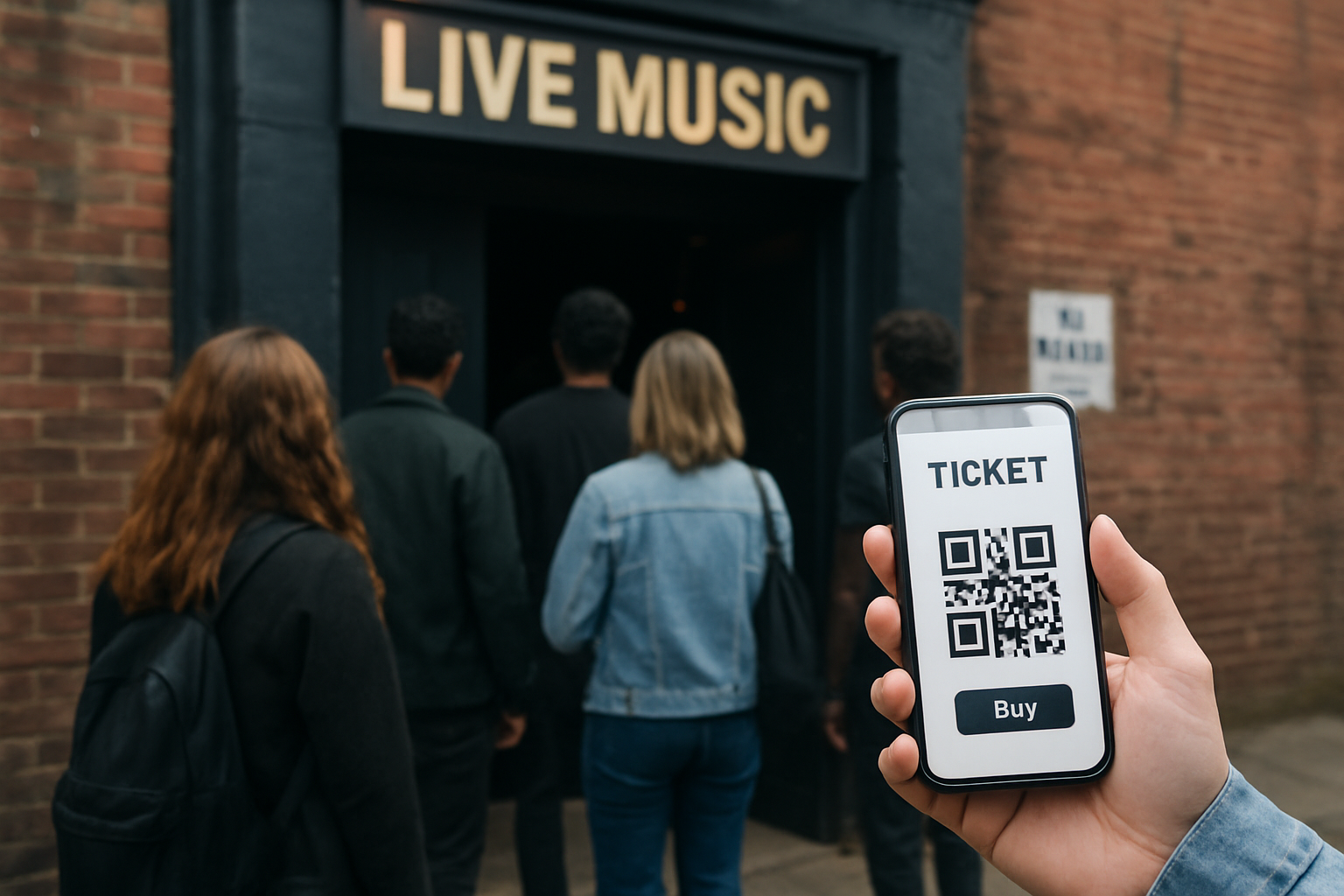
Ticketmaster has launched a new consumer app built around personalization. The update includes a Watchlist for upcoming events, a refreshed Favorites tool and a redesigned Home screen with categories such as For You, Trending and Last Minute.
The app is meant to make it easier for fans to track events and tickets inside Ticketmaster’s own ecosystem. But the company’s reach still has limits. Most non-stadium and arena tickets — estimated at 60% to 70% — are sold through other platforms, including AXS, Etix, See Tickets, DICE and Eventim. Independent services such as Bandsintown aggregate listings across Ticketmaster and those competing systems, which matters in a market where fans rarely buy through just one channel.
NIVA backs federal bot enforcement, pushes back on California bill
The National Independent Venue Association is supporting the bipartisan MAIN Event Ticketing Act, which is designed to strengthen enforcement against illegal ticket bots and give regulators more tools to protect fans and the live entertainment ecosystem.
The House bill, introduced by Representatives Diana Harshbarger and Troy A. Carter, Sr., advanced out of the House Commerce, Manufacturing, and Trade Subcommittee by voice vote this week. Its Senate companion, led by Senators Marsha Blackburn and Ben Ray Luján, has already cleared the Senate Commerce Committee and is now on the Senate Legislative Calendar.
At the same time, NIVA is asking Governor Gavin Newsom to veto California Assembly Bill 1349. The group says the bill, which began as an effort to ban speculative “ghost” ticket sales, was changed late in the process in ways that create loopholes for major resale platforms while shifting more legal liability onto independent venues, artists and fans.
That split-screen — tougher federal bot enforcement on one side, a disputed state bill on the other — is exactly the kind of policy tangle live operators know too well. The rules keep changing, and the burden usually lands on the people closest to the door.
Venues draw a line on smart glasses
Another policy shift is happening at the venue level. As Meta’s smart glasses and similar wearables become more common, more live music venues, dance clubs and festivals are banning them outright.
The reason is straightforward: privacy and consent. Operators are updating house rules to make clear that smart glasses are not welcome inside, both to protect patrons and staff and to preserve artists’ rights not to be recorded without permission. In a business already built on managing access, the line between convenience and surveillance is getting sharper.
For live music professionals, the message across all of these stories is the same. The business is still being shaped by the basics: who gets in, who gets paid, who controls the data and who controls the room.