
The Canadian rights group says the AI music platform generated and streamed tracks based on works in its repertoire without consent.
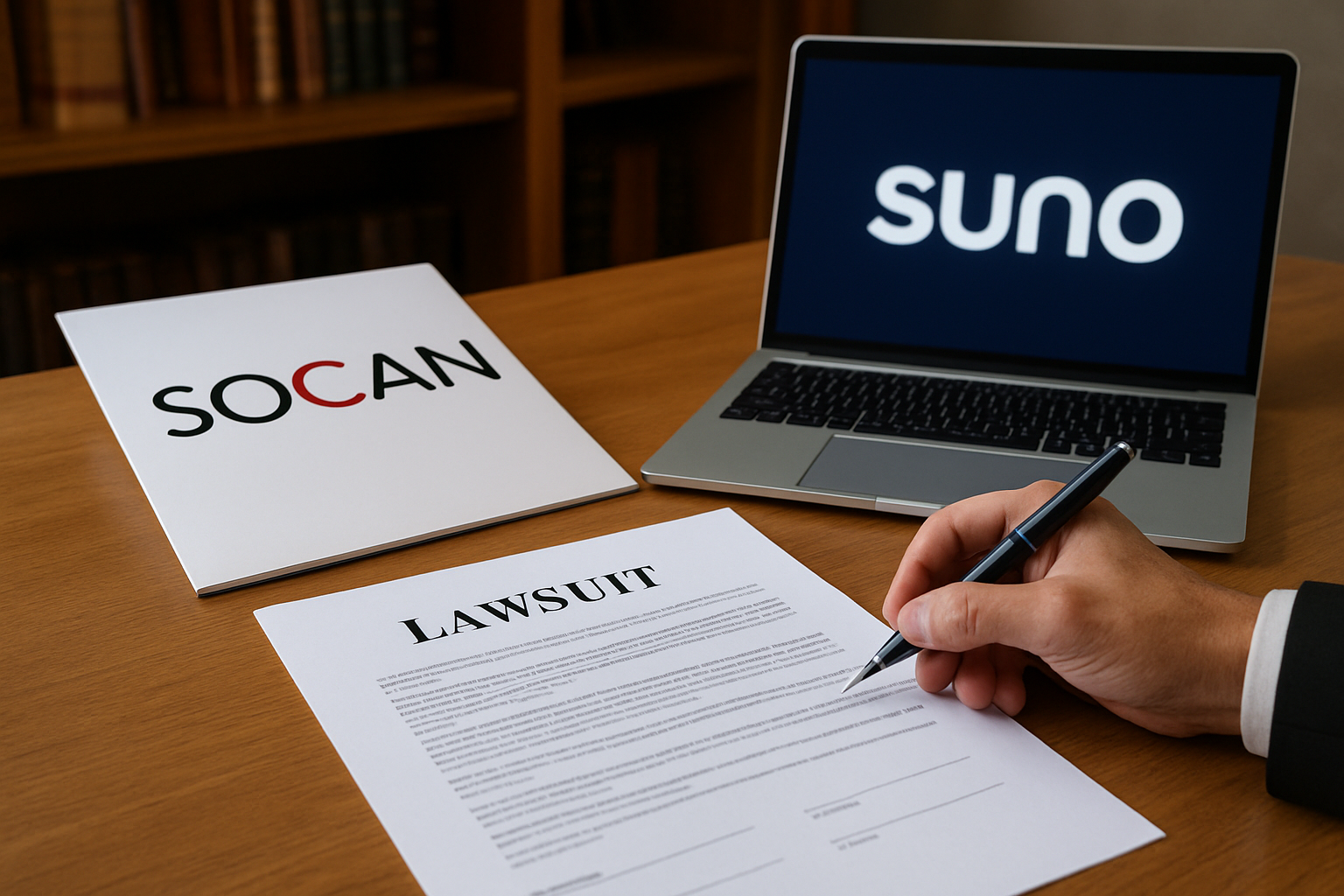
SOCAN has taken AI music platform Suno to Federal Court in Canada, accusing it of copyright infringement tied to songs in the organization’s repertoire. The filing, submitted Sept. 2, says Suno generated and streamed unauthorized copies of protected works to users in Canada.
What SOCAN says Suno generated
According to reporting cited by Music Business Worldwide, the statement of claim identifies 150 Suno-generated tracks drawn from 137 songs SOCAN represents. The examples named in the filing include Avril Lavigne’s “Sk8er Boi,” Tom Cochrane’s “Life Is a Highway” and Joni Mitchell’s “Both Sides Now.”
SOCAN has also posted online comparisons that pair original recordings with the Suno tracks it says infringe its members’ rights. The organization’s position is straightforward: the service allegedly produced and streamed material built from works it did not have permission to use.
The dispute over consent and compensation
Andrea Kokonis, SOCAN’s chief legal officer and general counsel, told Billboard Canada that Suno launched in Canada in December 2023 without SOCAN’s consent. She said later discussions did not resolve the dispute.
“We want to ensure that our members are paid when their songs are used,” Kokonis said.
The case lands in the middle of a broader fight over how AI music services handle copyrighted material. For rights organizations, the issue is not abstract. It is about whether a platform can train, generate and distribute outputs that resemble protected songs without a license or payment.
What SOCAN is asking the court to do
SOCAN is seeking damages and profits attributable to the alleged infringement. As an alternative, it is asking for statutory damages of CAD $20,000 per song. The organization is also seeking CAD $10 million in punitive and exemplary damages, along with court orders aimed at stopping further infringement.
Neither of the reports cited in the source includes a response from Suno. SOCAN’s own AI Lawsuit page lays out the organization’s view of the case in more detail.
For publishers, songwriters and rights executives watching the AI space, this is another test case with real stakes: who gets paid, who gets permission, and what happens when a platform enters a market before those questions are settled.