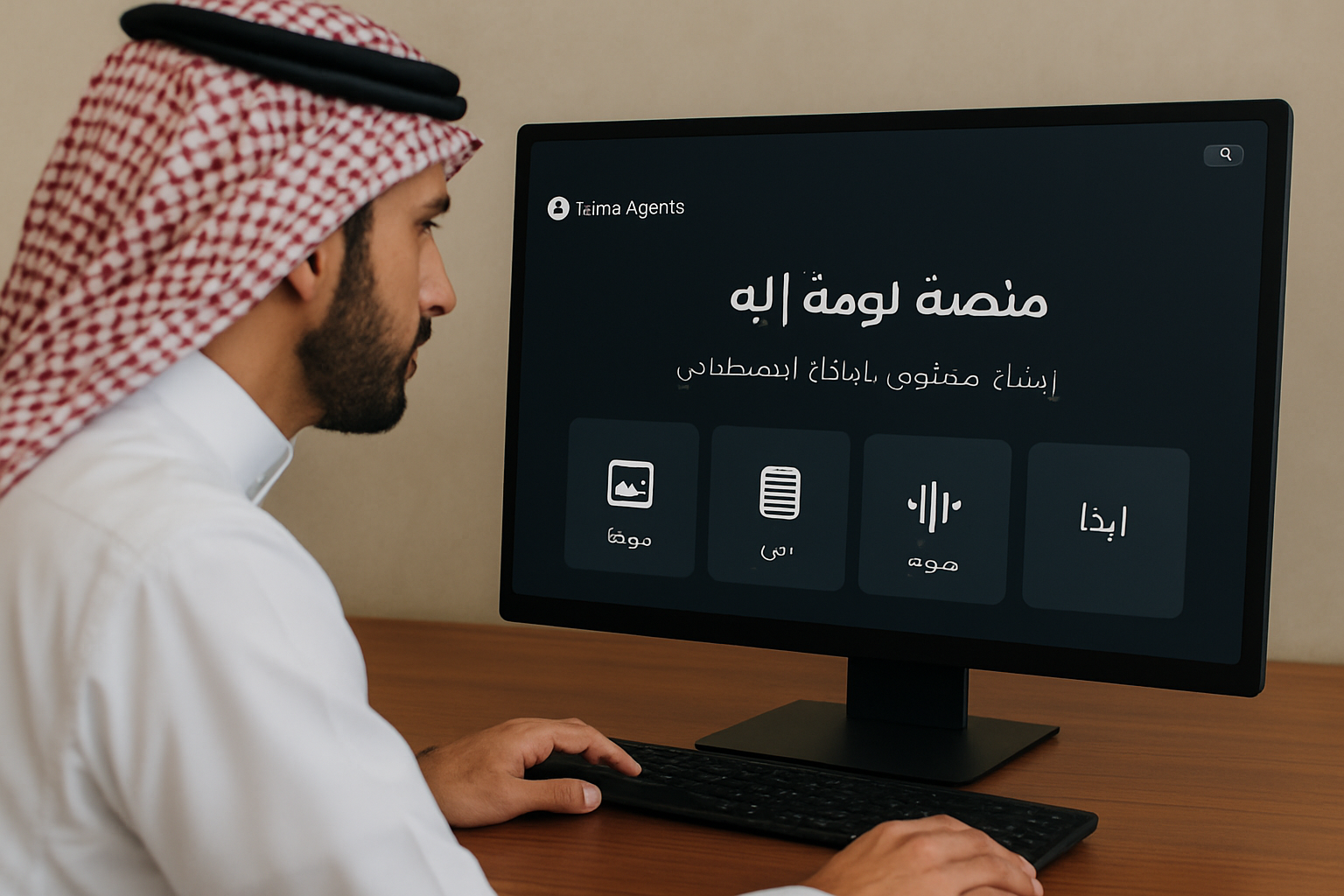
Luma AI says its Luma Agents platform will get a fully native Arabic interface later this year, starting with Saudi Arabia and the wider MENA region.
Luma AI is moving beyond Arabic prompts and outputs. Later this year, the company says Luma Agents will get a fully native Arabic-language interface, a shift aimed at creators and enterprises in Saudi Arabia and across the wider MENA region.
The rollout, announced at LEAP 2026 in Riyadh, will localize the full user experience on Luma’s unified AI creative platform. That includes navigation, menus and workflow tools, not just the language used to generate content. Arabic will be the first non-English interface language available on Luma Agents.
A full interface, not just translation
Luma already supports Arabic-language prompting and can generate Arabic-language creative outputs. The new update is broader. It is designed to let users work through the platform in Arabic from start to finish, moving from idea development into production without switching languages along the way.
That matters in a market where Arabic-language interfaces are still rare across AI generation tools, even as demand for AI-powered content creation grows across the GCC and the wider MENA region. For creative teams working primarily in Arabic, the friction is not only about output. It is about the workflow itself.
Luma says the change is meant to remove that barrier and make the platform more usable for professionals who want to stay in their native language while building and delivering creative work.
Saudi Arabia is the test case
The Arabic-language launch is tied to Luma’s strategic partnership with HUMAIN and to feedback from creatives and enterprises in Saudi Arabia. The company has also established its regional headquarters in Riyadh, underscoring how central the Kingdom has become to its regional push.
Jason Day, Luma AI’s head of EMEA, said the company spent the past year listening to the needs of the creative community in Saudi Arabia. He said the localization effort was guided by that community and aimed at helping the 400 million Arabic speakers worldwide move from first idea to finished outcome without having to work across multiple languages.
For AI platforms competing for adoption in the region, language support is no longer a cosmetic feature. It is part of the product. Luma is making a clear bet that a native Arabic interface will matter to the people actually using these tools to build campaigns, content and creative workflows.
What rolls out next
The company says the fully localized Arabic-language interface for Luma Agents will begin rolling out later this year. Luma has not given a more specific launch date, but says more information will be available on its website.
For now, the announcement puts Luma in a small group of AI creative platforms treating Arabic as a core product language rather than an afterthought. In a region where creative production is moving fast and language still shapes access, that distinction counts.