

For Classical Music Month, BMI revisits past Composer Award recipients and the work that followed their early recognition.
BMI is using Classical Music Month to do something most rights organizations do not: check back in. The company reached out to previous BMI Composer Award winners to see where those composers landed after the early-career recognition that, for many, marked a real turning point.
Recognition that opened doors, not just a ceremony
For nearly 75 years, the BMI Composer Awards have been positioned as a major honor for young composers. BMI frames the awards as the start of a longer relationship, not a one-night event. That matters in classical music, where visibility can be slow to build and a single performance can shape the next commission, the next orchestra, or the next recording.
In the company’s own telling, the awards have long served as a signal to the broader classical community that a composer is worth watching. The winners BMI highlighted this month made clear that the recognition did more than sit on a shelf. It helped validate their work, sharpen their direction, and, in some cases, put their names in front of major orchestras and labels.
Katherine Balch: from difficult score to major premieres
Katherine Balch, who won BMI Composer Awards in 2017 and 2018, said the recognition for her orchestral piece “Leaf fabric” encouraged her to keep pushing toward new sonic ideas, even when the music was difficult to mount. The piece, she noted, still has not been performed again since its premiere. That did not change the value of the award in her eyes.
Balch pointed to a run of high-profile performances in recent years, including the world premiere of “musica pyralis” with the Pittsburgh Symphony and the New York Philharmonic. She also cited premiere performances of her cello concerto for Zlatomir Fung in Europe and the United States by the Dallas Symphony Orchestra, the Darmstadt Staatstheater, and the BBC Philharmonic.
She said some of the most rewarding work has come through close collaboration, including the recent premiere of “still life” for Talea Ensemble, a piece for octet, electronics, and video created with her husband, composer and sound artist Ted Moore. Her next project is a portrait album of chamber works spanning nearly a decade, with release planned for late 2027.
Juan Pablo Contreras: a prize that changed the pitch
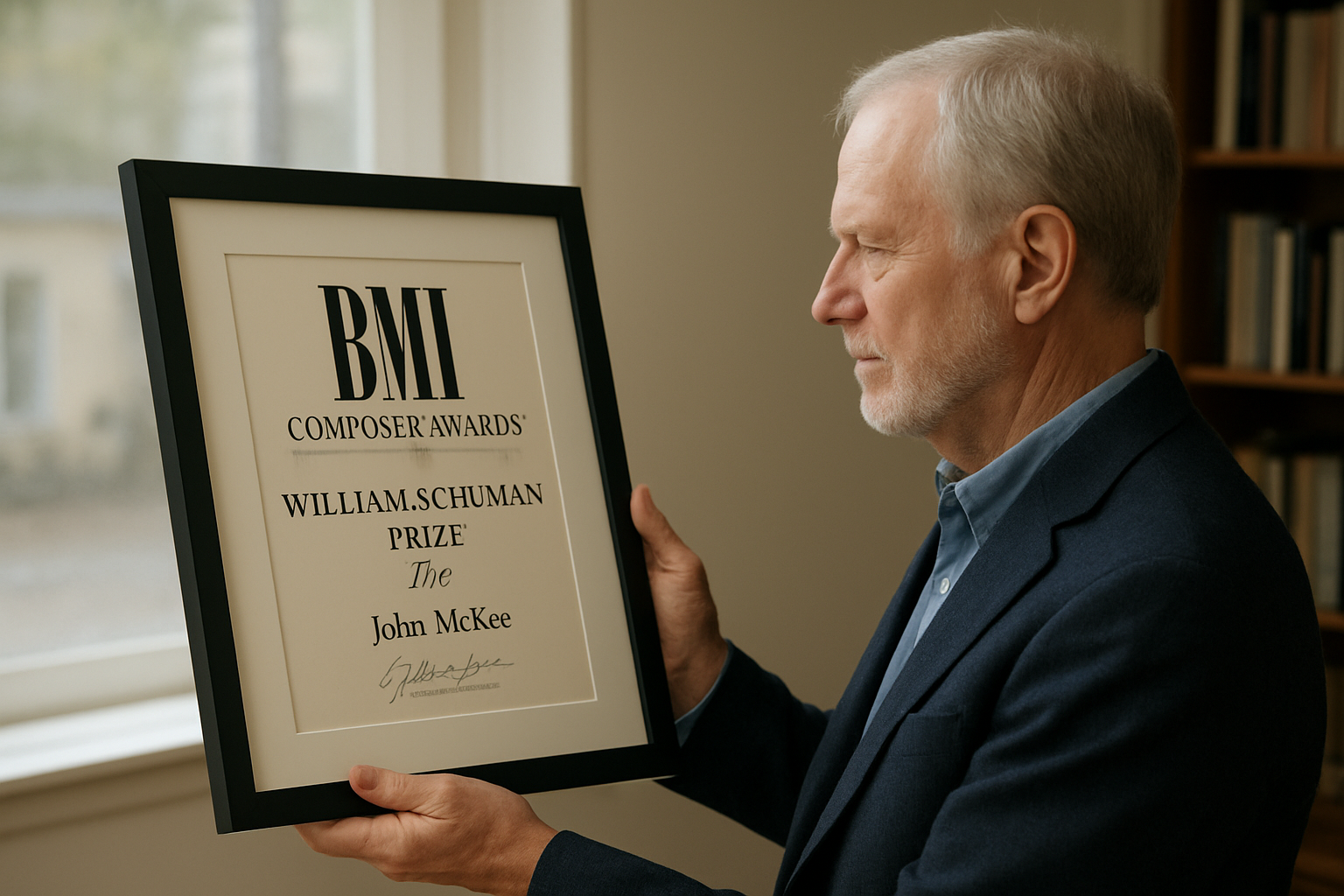
Juan Pablo Contreras, who won the BMI William Schuman Prize in 2013 for “El Laberinto de la Soledad,” described the award as life changing. He said it gave him the confidence to present himself as an orchestral composer and helped establish him on the international scene.
In the two years after the award, the piece was performed by ten orchestras across Argentina, Mexico, Venezuela, and the United States. It later appeared on his debut orchestral album with Universal Music, Mariachitlán, which received a Latin GRAMMY nomination in 2019.
Contreras said the award also gave him the courage to keep developing his voice as a Mexican composer. He still keeps the diploma in his studio as a daily reminder to compose.
His recent milestone was the premiere of Symphony No. 1, “MyGreat Dream,” co-commissioned by seven orchestras: Youth Orchestras of Fresno, Victoria Bach Festival, Orquesta Sinfónica de Minería, Orquesta Latino Mexicana, Pasadena Symphony, Elgin Symphony, and Harmonium of Texas. The work traces his experience of living half his life in Mexico and half in the United States, and the search for home that came with it.
The symphony will also appear on his forthcoming orchestral album with Universal Music. Contreras conducted the recording with the 72-member Orquesta Latino Mexicana. The album’s first single, “MeChicano,” is already out on YouTube and major streaming platforms.
Jon Cziner and the value of first recognition
Jon Cziner, who won the 2018 BMI Composer Award for “Resonant Bells,” said the honor was the first time his orchestral music received that kind of recognition. He described the win as both surprising and meaningful, a moment that helped establish his work more firmly.
That is the through line in BMI’s roundup. The awards are not presented as an endpoint. They are a marker, sometimes an early one, that can help a composer move from promising name to working artist with a longer runway. For composers building careers in a field where momentum is hard won, that kind of validation still carries weight.