
A BMI Q&A with Songstats breaks down the signals that matter, from TikTok spikes to radio, and why creators need to act fast when traction starts.
Music creators have more data than ever, but the hard part is knowing which signals actually mean a song is moving. BMI’s new Q&A with Songstats gets straight to that problem: where momentum starts, how it spreads, and what artists and songwriters should do before the moment passes.
Momentum starts outside the old gatekeepers
Songstats says the old model has shifted. Momentum is now less likely to begin with labels or radio and more likely to surface on TikTok, Spotify or Instagram. The strongest early signs, according to the company, include editorial playlist adds, algorithmic support, a fast rise in user-generated videos, Shazam spikes, major DJ support and chart activity on Beatport or Traxsource.
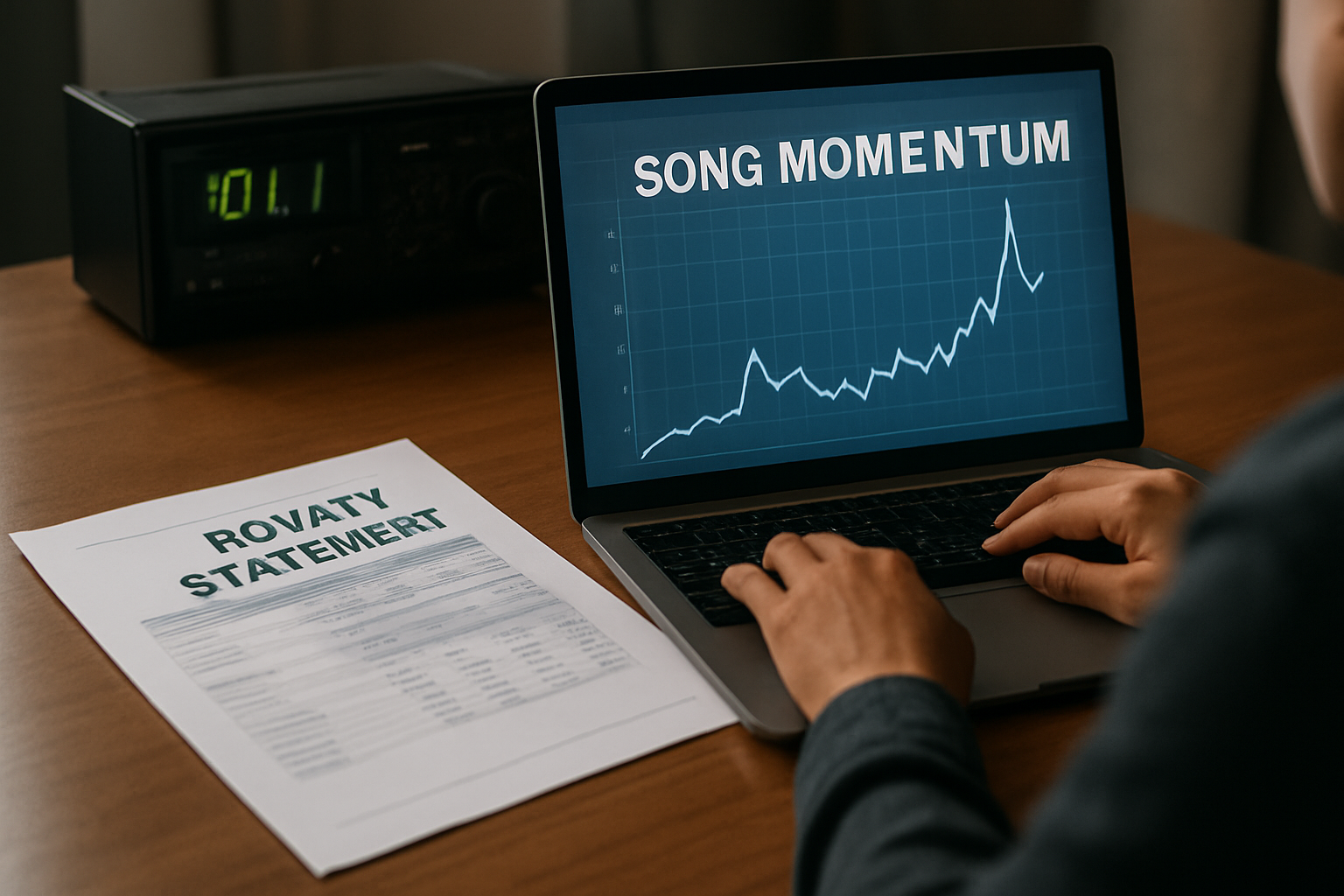
The point is not just to watch those signals, but to catch them early enough to respond. Songstats says its platform sends real-time push notifications across playlist, chart, social, DJ and radio activity so artists and teams can move while the song is still building.
Two common paths, one goal: turn attention into retention
Songstats describes momentum less as a straight line than as a feedback loop. Still, it sees two repeatable paths showing up often.
The first runs through playlists, then algorithmic support, then social media, then radio. In that pattern, a song gets early playlist traction, gets picked up by autoplay systems like Release Radar or Discover Weekly, starts showing up in TikTok and Instagram clips, and then spills into radio and charts.
The second starts on social, usually TikTok, then moves into streaming and radio. That path can also revive older songs. A short clip goes viral, listeners Shazam the track and stream it on DSPs, platforms react with playlist and chart support, and radio follows.
Songstats makes one thing clear: momentum is not the finish line. The real work is converting attention into a deeper fan base through direct-to-fan communication, merch, touring and marketing.
Why the data matters beyond bragging rights
For BMI’s audience, the value of this kind of tracking goes well beyond vanity metrics. Songstats says creators should use data to measure growth, understand what is working and see where listeners are coming from. Streaming growth, social gains and radio support can show how far a song is reaching, how many fans it is converting and where the industry is backing it.
That information also has negotiating value. Songstats points to publishing deals, sync pitches and royalty advances as places where clear performance data can help make the case. It can also open doors with DJs, artists and songwriters already engaging with the music.
For marketing, the message is simple: spend where the song is already moving. If traction is building in a specific region, Songstats says to lean in with ads, social posts and local campaigns, including radio, PR, influencers and curators.
What songwriters should watch most closely
Songstats says songwriters, engineers and collaborators are often the ones left with the least visibility into how a song performs. That is why it flags streaming metrics, social and DJ support, and radio as especially useful. Airplay, the company notes, translates directly into revenue for songwriters, and if a play is missing from statements, it is worth checking with a publisher or PRO.
The company also points to two practical tools: data on other artists, which can help identify collaboration opportunities, and a master catalog list, which gives songwriters a single place to track career-wide performance and spot top-earning songs for licensing, sync and publishing pitches.
BMI affiliates can access the Songstats offer through BMI Spark or the BMI online services portal, which includes 15% off a Songstats subscription.
For editorial consideration and industry coverage inquiries, contact [email protected]