

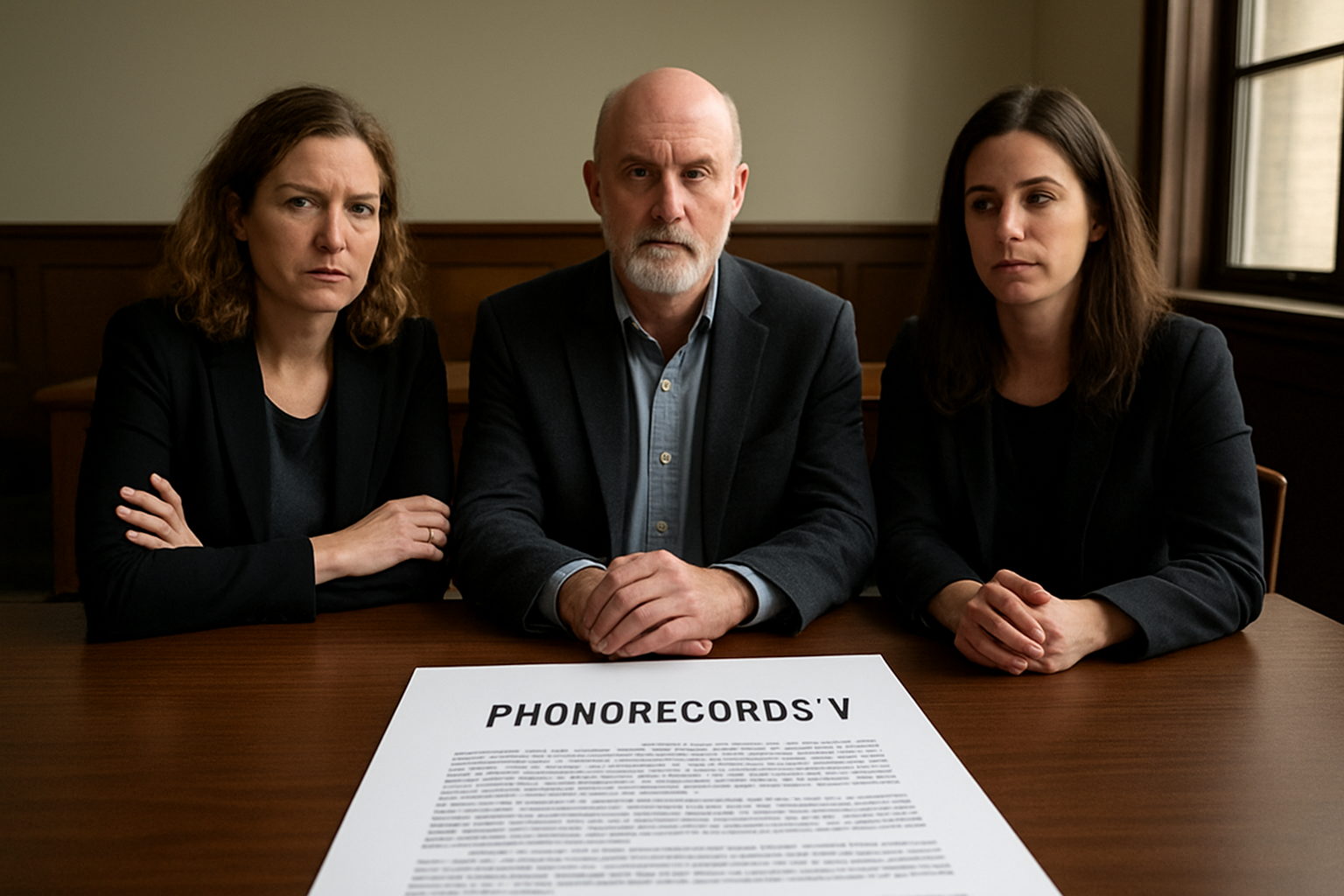
Helienne Lindvall, David Lowery and Blake Morgan say the Copyright Royalty Judges need more than the settlement itself to justify new mechanical rates.
Independent songwriters are challenging the logic behind the proposed Phonorecords V settlement, arguing that the Copyright Royalty Judges need an actual record to support whatever rates they approve for physical product and permanent downloads.
The objection, laid out by Helienne Lindvall, David Lowery and Blake Morgan, does not attack settlement as a concept. It goes after something narrower and more consequential: whether the judges can determine a rate is reasonable when the only evidence in front of them is the settlement itself.
The question the settlement does not answer
The commenters say Congress gave the judges, not the negotiating parties, the job of deciding whether a private agreement can serve as a reasonable basis for rates that will apply across the industry. Their point is blunt. If the record stops with the NMPA’s settlement, then the judges are being asked to bless a result without the kind of economic showing that should support it.
That matters because Phonorecords V is not a private contract between a few players. It sets mechanical rates for an entire market. The commenters argue that a settlement can be part of the picture, but it should not be the whole picture.
Why the 12-cent benchmark is under fire
The filing also takes aim at the idea of carrying the 12-cent Phonorecords IV benchmark into another five-year term simply because it remains indexed to inflation. CPI may preserve the real value of the old benchmark, the commenters say, but that does not prove the number is still reasonable for 2028 through 2032.
That distinction is the heart of the objection. Inflation indexing keeps a rate from eroding. It does not, by itself, establish that the underlying rate should be the starting point for a new period.
Vertically integrated players complicate the record
The commenters also point to the structure of the market itself. With vertically integrated companies operating on both sides of the settlement, they argue, the absence of a fuller economic record becomes even more important. When the same corporate families can sit in multiple positions in the chain, a bare settlement raises more questions than it answers.
That is the broader concern running through the objection: whether the process is producing a rate because it has been tested, or because the parties with the most leverage agreed to it. For independent writers, that difference is not academic. It goes to how mechanical royalties are set for the next five years, and who gets to decide what “reasonable” means.
The Phonorecords V proceeding has already drawn scrutiny from songwriters who see the case as a test of how much weight a negotiated deal should carry when the result will be imposed industry-wide. This latest comment keeps the focus on the same point: without a real evidentiary record, the settlement may tell the judges what the parties want. It does not tell them why the rate should stand.
For editorial consideration and industry coverage inquiries, contact [email protected]